2025: A Year in Review

What we shipped in 2025 to make production AI agents actually work.
2025 was a defining year for HoneyHive.
We raised $7.4M from Insight Partners, grew our team 3x, achieved SOC 2 Type II + GDPR + HIPAA compliance, and onboarded multiple Fortune 500 customers. But more importantly, we learned what it really takes to move LLM applications from proof-of-concept to production at scale.
Every conversation with our customers reinforced the same truth: the gap between "it works in the demo" and "it works in production with millions of users" is enormous. The challenges aren't just technical—they're organizational. How do you systematically review thousands of agent interactions? How do you catch regressions before users do? How do you maintain quality as your system evolves?
This year, we built the answers.
From Chaos to System
When human oversight becomes the bottleneck
Early in the year, we kept hearing the same pain point: teams were drowning in Slack threads and CSV exports, manually triaging which AI interactions needed review. So we shipped Annotation Queues—a way to route events requiring human review to the right reviewers, automatically. Set up rules once, and let the system continuously flag what matters. No more ad-hoc processes. Just systematic workflows that scale.
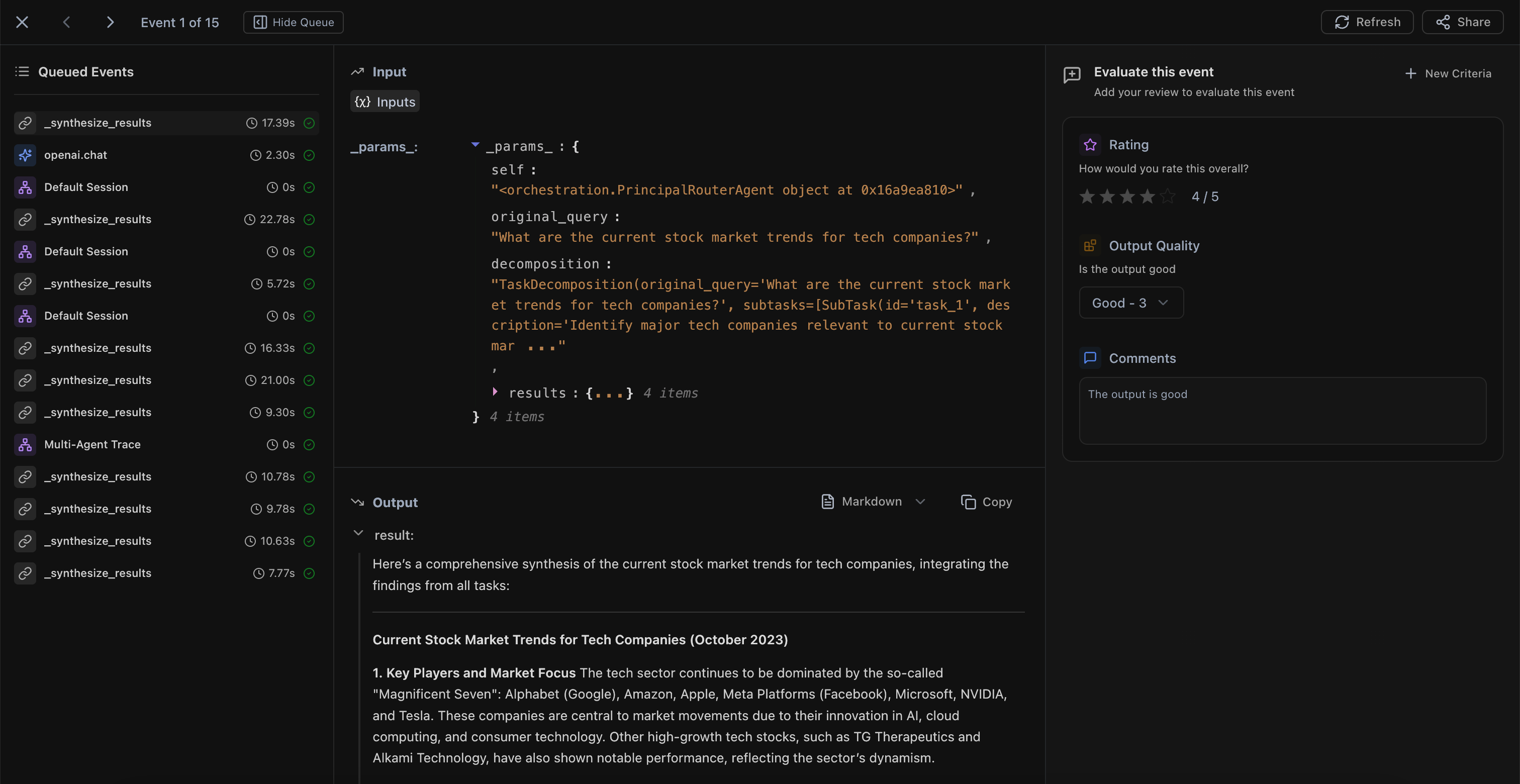
We also introduced Review Mode, making it effortless to tag traces, apply custom criteria, and add comments with full context about what you're evaluating—whether it's a model output, tool call, or entire workflow.
When you need to know the moment something breaks
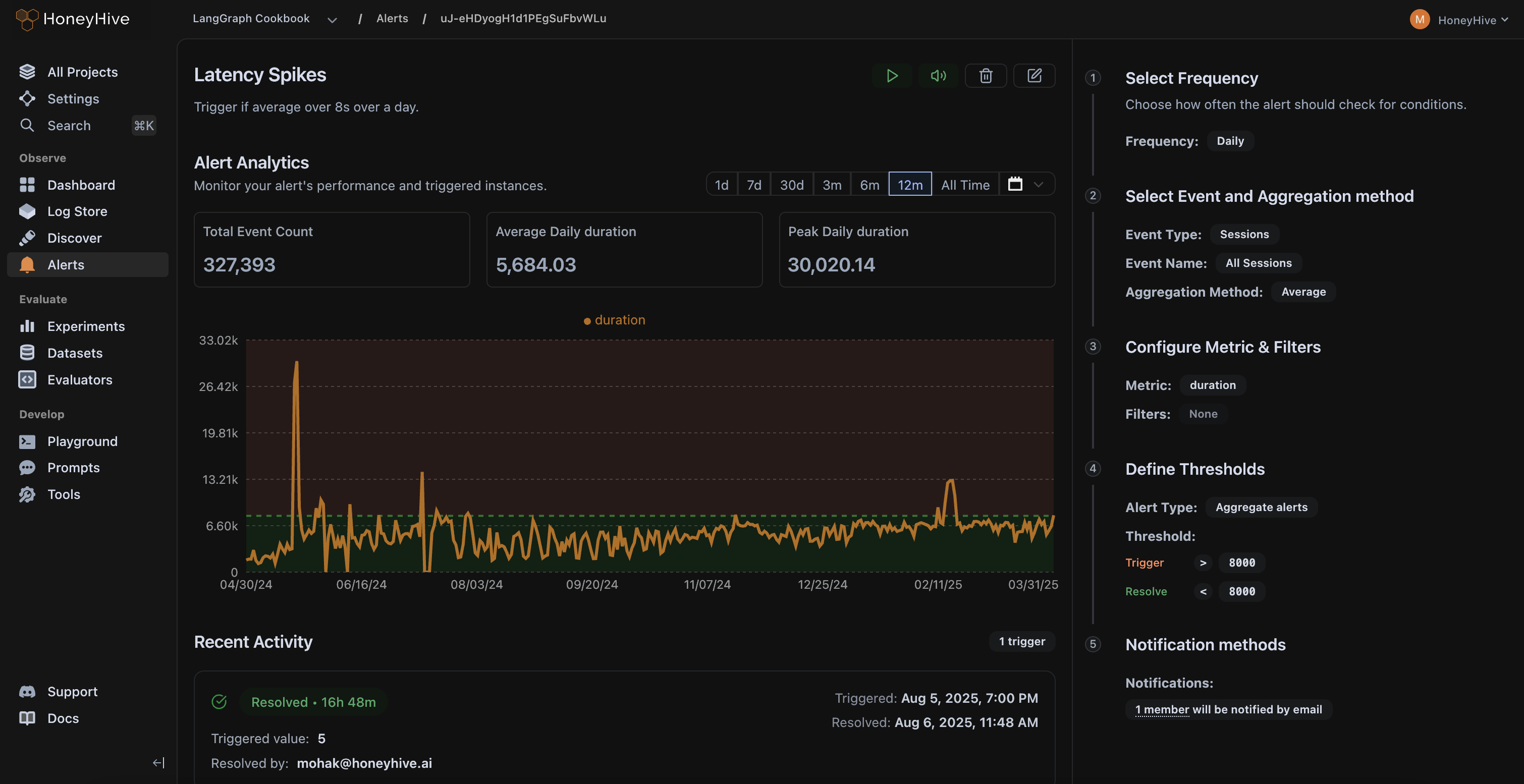
You can't watch dashboards 24/7. That's why we built Alerts & Anomaly Detection—your early warning system for when behavior changes in production. Track performance metrics, quality scores, costs, or any custom field with threshold-based or drift-based alerts. Catch issues before your users do.
Seeing What's Really Happening
Understanding complex agent behavior
Multi-agent systems are inherently complex. To make sense of them, we completely reimagined how you visualize and explore traces:
- Session Summaries give you a unified view of metrics, evaluations, and feedback across all spans
- Timeline View provides flamegraph visualization for identifying latency bottlenecks
- Graph View maps execution paths through multi-agent workflows, showing you the actual trajectories your agents take—with automatic node deduplication and weighted edges revealing execution patterns
- Threads display LLM messages and chat history across systems in a chronological timeline, with automatic agent-handoff detection
.png)
The goal? Make it intuitive to understand what your agents are actually doing, not just what you think they're doing.
Learning from 100+ experiments at once
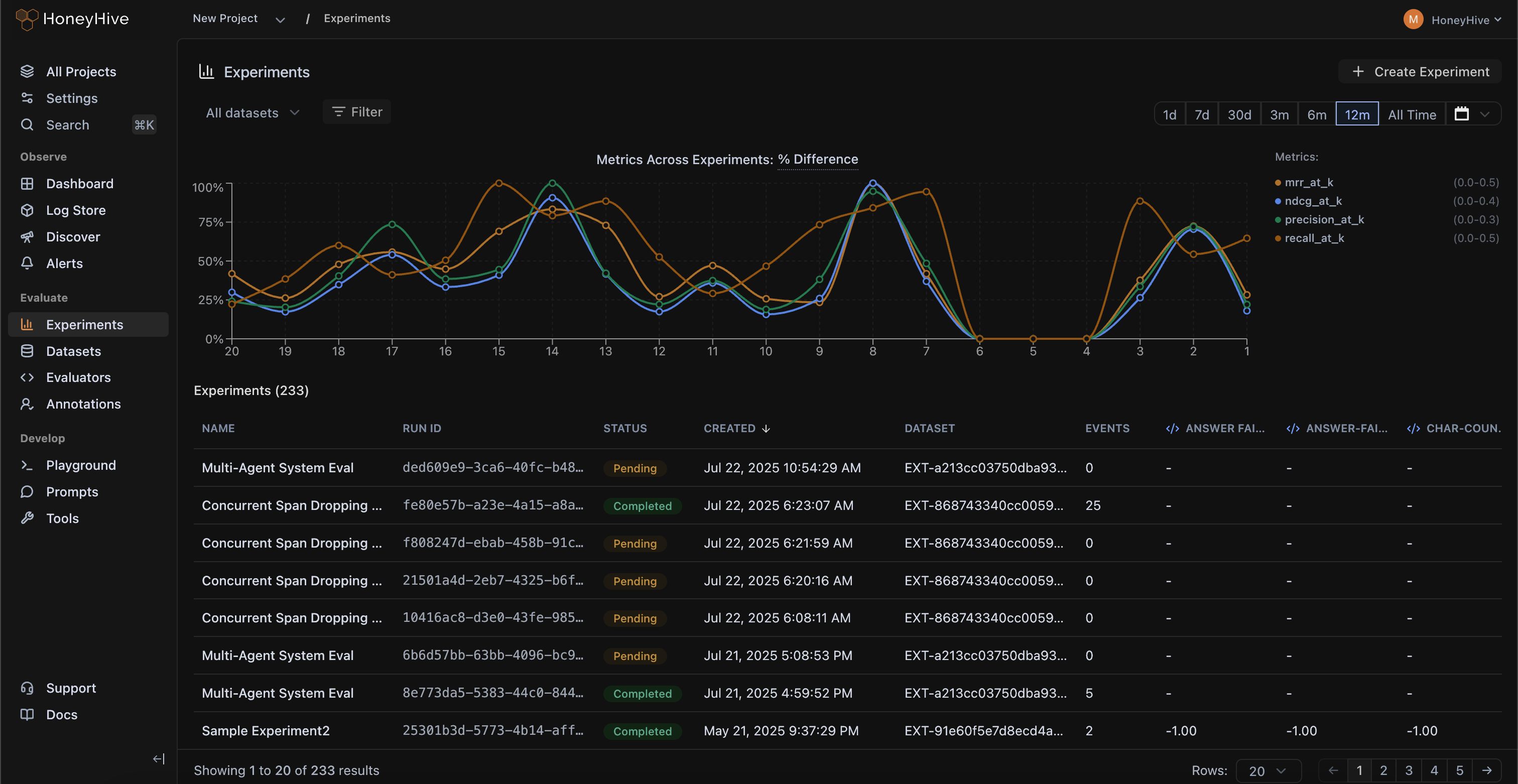
As teams run more experiments, the challenge shifts from "did this work?" to "which of these 50 experiments actually moved the needle?" Our new Experiments Dashboard lets you visualize metric trends across all experiments in a unified view. Spot regressions at a glance. Compare hyperparameter sweeps. Make better decisions faster.
Building With Confidence
We shipped 11 new evaluator templates covering Agent Trajectory, RAG, Safety, Code Generation, and more—along with Categorical Evaluators for classification-based human evaluation. We redesigned the entire evaluator creation interface to be faster and more intuitive.
We added Role-Based Access Control with two-tier permissions and project-specific API key scoping—critical for enterprises with compliance requirements.
And we launched new Python and TypeScript logger SDKs with zero external dependencies and fully stateless design, optimized for serverless environments like AWS Lambda.
Small Wins That Compound
Beyond the big features, we shipped dozens of quality-of-life improvements: Wide Mode for expanded workspace. Collapsible sections in experiments. Log Store volume charts for traffic trends. New filtering operators. External dataset support. Git context enrichment. And countless more small and big improvements under the hood. Each one removes a small friction point, and together they make the platform feel effortless.
What's Next
Multi-agent systems aren't the future—they're happening now. Enterprises are moving from pilots to production, and the bar for reliability keeps rising.
The challenges ahead are clear: How do you maintain quality as systems grow more complex? How do you debug emergent behavior in multi-agent workflows? How do you build trust with users when AI is making real decisions?
We're building the infrastructure layer to answer these questions. The best part? We're just getting started.
Thanks for building with us.
— The HoneyHive Team